
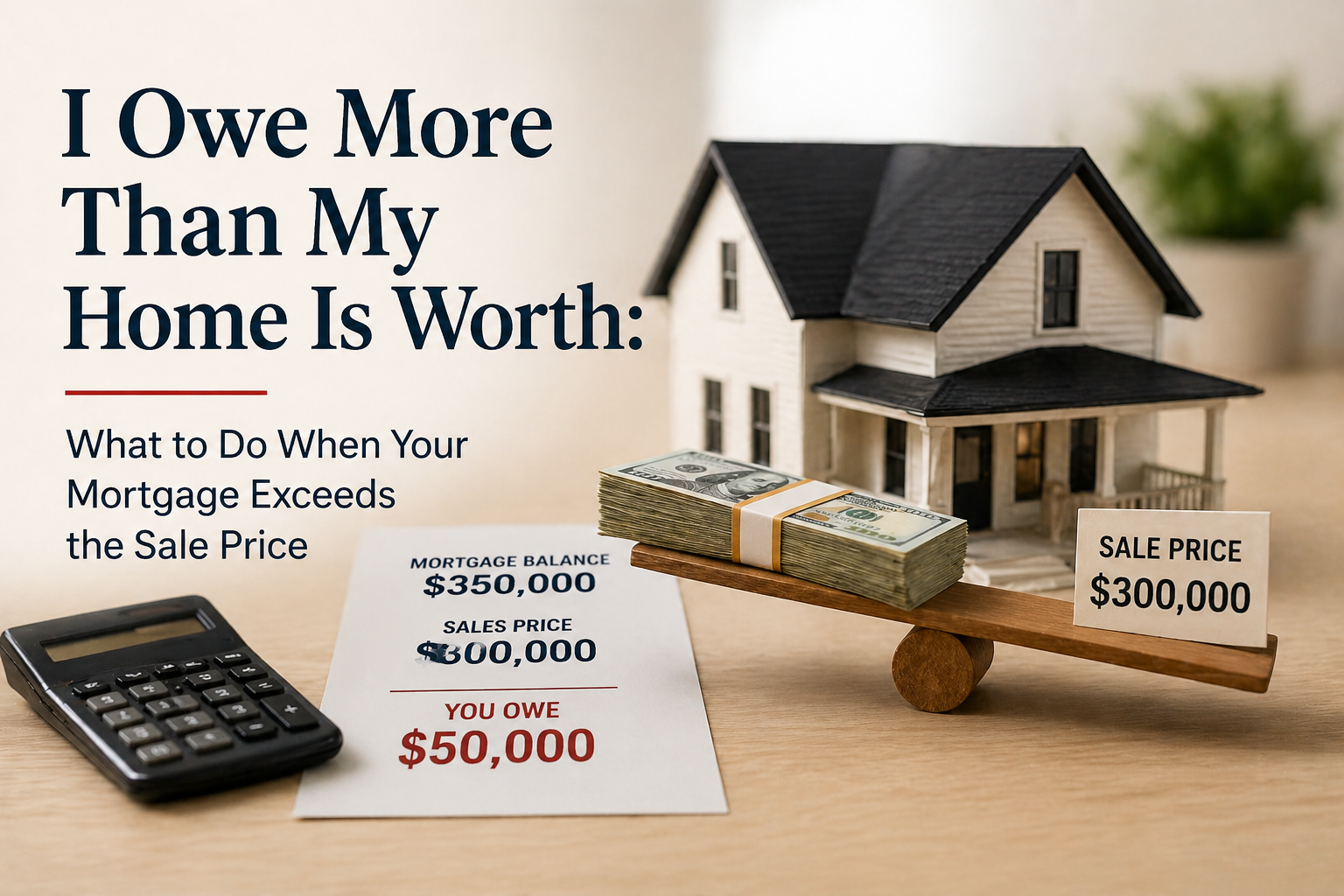
What to Do When Your Mortgage Exceeds the Sale Price
Elite Realty Group · Seller Guide
What to Do When Your Mortgage Exceeds the Sale Price
A refined guide to understanding how a short sale may work for sellers, including lender review, hardship requirements, benefits, risks, and next steps.
The home may be worth less than the remaining mortgage balance.
The mortgage lender must review and approve the short sale request.
A short sale may help reduce foreclosure risk depending on circumstances.
How Does a Short Sale Work for the Seller?
A short sale may be considered when the market value of the home has dropped, the homeowner is close to default, and a qualifying hardship prevents them from covering the difference between the mortgage balance and the sale price.
Lender Review
Common Short Sale Criteria
Lower Market Value
The lender may review recent comparable sales to confirm the home’s value has dropped below the mortgage balance.
Risk of Default
The homeowner may be near default and unable to use available assets to keep covering mortgage payments.
Qualifying Hardship
The seller usually needs to show a hardship that prevents them from paying the shortfall now or in the future.
Hardship Letter
Sellers often need to provide a hardship letter or affidavit with supporting documents that verify the situation.
Pros and Cons of a Short Sale for Sellers
A short sale may offer a path away from foreclosure, but it can still affect credit, future financing, proceeds, and possible debt repayment. Sellers should understand both the benefits and risks before moving forward.
Seller Dashboard
Benefits and Drawbacks
May Prevent Foreclosure
One major benefit is avoiding foreclosure, which can have long-term effects on credit and future mortgage eligibility.
Possible Debt Relief
The lender may forgive some or all remaining debt after the sale, depending on loan terms and lender approval.
Future FHA Loan Possibility
Some sellers may still have a path to finance a future home with an FHA loan, depending on eligibility and timing.
No Seller Proceeds
Since the home sells for less than the mortgage balance, sellers usually do not receive proceeds from the transaction.
Credit Impact
A short sale can damage credit, though the impact may be less severe than a foreclosure.
Mortgage Waiting Period
Sellers may face a waiting period, often 2 to 7 years, before qualifying for certain traditional mortgages.
Possible Deficiency Judgment
If the sale does not cover the debt, the lender may pursue repayment in some states. This is not legal everywhere.
Limited Negotiation Control
Because lender approval is required, sellers may have less control over price, timing, and final transaction terms.
Seller Readiness
Where Short Sale Sellers Should Focus
Elite Realty Group
Is a Short Sale Right for You?
If you need to sell but your mortgage exceeds the sale price, a short sale may help you avoid foreclosure and move forward. Elite Realty Group can help you understand the process, prepare documentation, and evaluate your next best step.


Leave a Reply